Exploring the Neurodivergent Doctor's learning experiences within Haematology
Because it's not been explored before
1. Culture with NHS. Professional vs ablesim
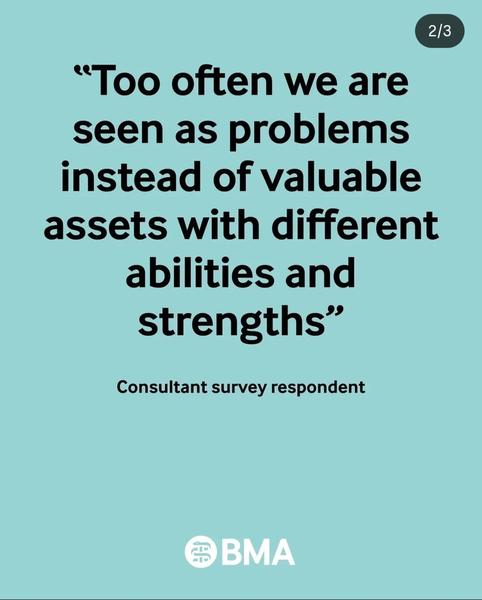
Neurodivergent doctors are present at every level (but many choose not to disclose due to repercussions (real vs perceived). This means they may not have access to reasonable adjustments and be suffering in silence.
2. An 'Invisible' group of doctors
Many do not know they are neurodivergent, and are diagnosed later in adulthood at a time of increased stress or responsibilities, when their coping strategies are no longer enough to compensate. Does this mean that prior learning experiences didn't adequately cater to their needs?
3. Reactionary vs proactive educational design
The burden of seeking reasonable adjustments is placed on the individual requiring them, creating added barriers and steps at a time when they need more support
1. What are their learning experiences within haematology?
2. Perceived barriers to learning
3. Perceived facilitators to learning
Think of Universal-design as the proactive friend who always considers what you would want/need in a situation.
This friend, was a wheelchair using architect who was tired of the ugly ramps slapped onto buildings as a clumsy afterthought. He intentionally designed accessible buildings which not only helped wheelchair users, but also Pram-pushers, delivery drivers etc.
With time, universal design was less about physical spaces and more about learning environments. Instead of one rigid way of presenting information, and expecting learning to adapt retrospectively, UDL anticipated that there would be variations from the start. By offering choices, inclusive and accessible design, it benefits the whole group, and not just those who it was designed to help
You’re in teaching. Someone explains something once, quite quickly, and moves on.
One person gets it straight away. Another sort of half gets it but needs a minute to think. Someone else is already a bit lost but doesn’t say anything.
The difference isn’t really intelligence. It’s just that people are at slightly different starting points in that moment.
Vygotsky describes the 'zone of proximal development' as the sweet spot. The space, where they don’t fully get it yet, but could with the right support.
And that support doesn’t have to be a big thing. It might be explaining it another way, slowing down slightly, or just having it laid out more clearly so it actually lands.
I'm curious to see whether neurodivergent doctors have felt that they have had sufficient scaffolding within haematology or are left to figure it out on their own.
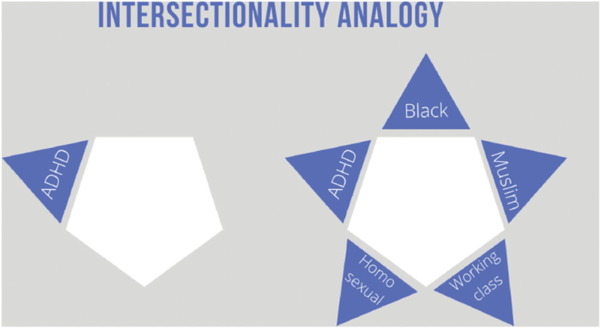
You can have two doctors in the same room, with the same diagnosis, say ADHD, and on paper, they should be having a similar experience. But they’re not.
One speaks up, asks questions, gets labelled “engaged”. The other hesitates, worries how they’ll be perceived, and stays quiet. One gets support early. The other gets told they’re “not quite keeping up”.
Nothing about their ADHD is necessarily different. What’s different is everything around it, their gender, their background, how safe they feel, where they sit in the hierarchy.
You can’t understand someone’s experience by looking at one part of their identity in isolation, because it’s the combination that shapes what actually happens to them.
So for this project, it’s a reminder that there isn’t one “neurodivergent experience”. It depends on who you are, where you are, and how everything around you interacts with it.